Intermittent Fasting: A Simple Guide to Get Started
Intermittent fasting (IF) has become a popular lifestyle choice for those looking to improve their health, manage weight, and simplify eating habits. At its core, intermittent fasting isn’t about what you eat—it’s about when you eat. This simple yet effective approach can help you harness your body’s natural rhythms and make smarter choices about your meals.
Here’s a straightforward guide to intermittent fasting, including what it is, how it works, and tips for getting started.
What Is Intermittent Fasting?
Intermittent fasting is an eating pattern that alternates between periods of eating and fasting. Instead of focusing on specific foods or calorie counting, IF emphasizes timing. There are various methods of intermittent fasting, but the common goal is to give your body a break from digestion, allowing it to focus on other processes like fat burning and cellular repair.
How Does Intermittent Fasting Work?
When you eat, your body spends hours digesting and processing food, using glucose (sugar) as its primary source of energy. During fasting periods, your body depletes its glucose stores and begins to burn stored fat for energy—a process known as ketosis.
Fasting can also:
- Improve insulin sensitivity
- Promote cellular repair through autophagy (a process where the body clears out damaged cells)
- Reduce inflammation
- Support weight loss by naturally reducing calorie intake
Popular Intermittent Fasting Methods
There are several ways to incorporate intermittent fasting into your lifestyle. Here are a few of the most common methods:
- 16/8 Method: Fast for 16 hours and eat during an 8-hour window. For example, you might eat from 12 p.m. to 8 p.m. and fast the rest of the day.
- 5:2 Method: Eat normally for five days of the week, then consume only 500–600 calories on the other two days.
- Eat-Stop-Eat: Involves fasting for a full 24 hours once or twice a week.
- Alternate-Day Fasting: Alternate between days of normal eating and days of fasting or eating very few calories.
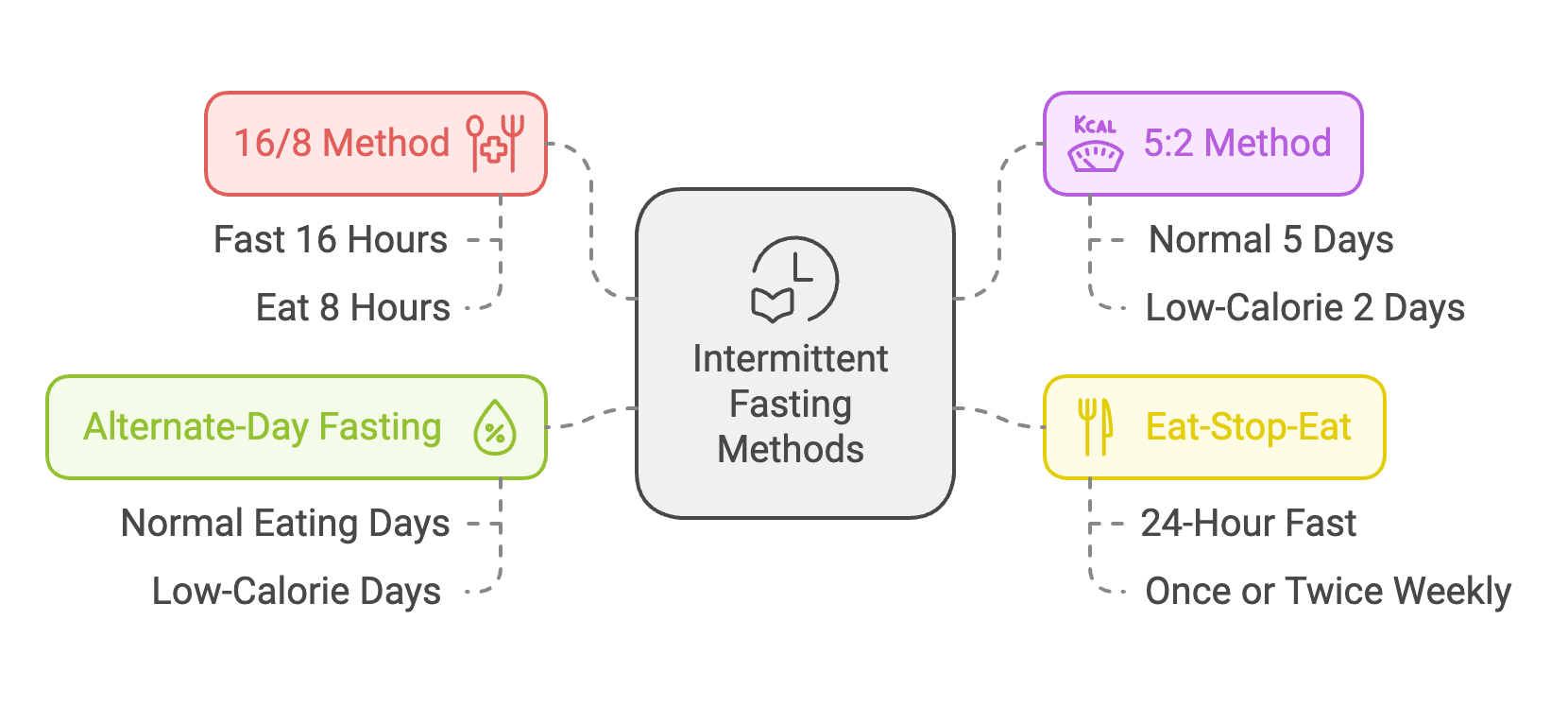
Each method offers flexibility, so you can choose the one that best suits your lifestyle and goals.
Benefits of Intermittent Fasting
Intermittent fasting has been linked to various health benefits, including:
- Weight Management: By limiting the eating window, you naturally reduce calorie intake, making weight loss easier for many people.
- Improved Metabolism: Fasting may boost metabolic health by enhancing fat-burning processes and improving insulin sensitivity.
- Mental Clarity: Many people report better focus and mental clarity during fasting periods.
- Simplified Eating: Fewer meals mean less planning, preparation, and stress about food choices.
- Longevity: Studies suggest fasting can promote cellular repair and reduce the risk of chronic diseases, potentially supporting a longer lifespan.
Tips for Getting Started with Intermittent Fasting
- Start Gradually: If the idea of fasting seems daunting, ease into it by trying a 12-hour fasting window and gradually extending it as your body adjusts.
- Stay Hydrated: Drinking water, herbal tea, or black coffee during fasting periods can help suppress hunger and keep you energized.
- Focus on Nutrient-Dense Foods: When you break your fast, prioritize whole, nutrient-rich foods to fuel your body effectively.
- Listen to Your Body: If you feel lightheaded or overly fatigued, adjust your fasting routine or consult a healthcare professional.
- Stay Consistent: Like any habit, intermittent fasting works best when you stick with it consistently over time.
Who Should Avoid Intermittent Fasting?
While intermittent fasting is safe for most people, it’s not suitable for everyone. Individuals who are pregnant, breastfeeding, underweight, or have a history of eating disorders should avoid fasting. Always consult with a healthcare professional before starting a new eating pattern, especially if you have any underlying health conditions.
Conclusion
Intermittent fasting offers a flexible and straightforward approach to health and wellness. By focusing on when you eat rather than what you eat, you can simplify your lifestyle while enjoying benefits like weight management, improved metabolism, and mental clarity. Whether you choose the 16/8 method or another fasting schedule, the key is to find a routine that fits your needs and feels sustainable.
Ready to give it a try? Start small, stay consistent, and listen to your body as you explore the benefits of intermittent fasting!

- Hartwick, Adam (Author)
- English (Publication Language)
- 40 Pages – 05/30/2025 (Publication Date) – Independently published (Publisher)

- Hartwick, Adam (Author)
- English (Publication Language)
- 45 Pages – 06/24/2025 (Publication Date) – Independently published (Publisher)